_500x440.webp)





Houses for sale in Spain
More than 800 listings with up-to-date details, photos, and prices for houses in Spain are available on the Houses-Spain website. Select a property that matches your preferences and investment goals, and provide your contact information to connect directly with the developer or agency, ask questions and discuss the deal.
Types of houses in Spain
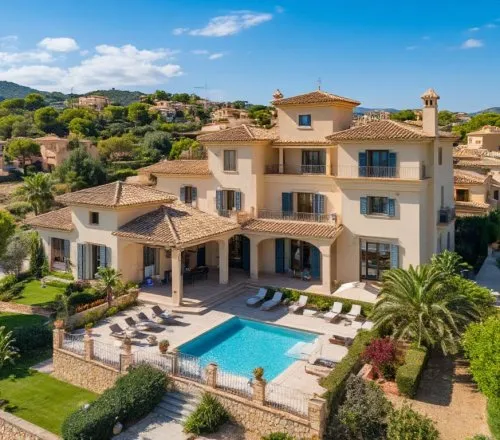
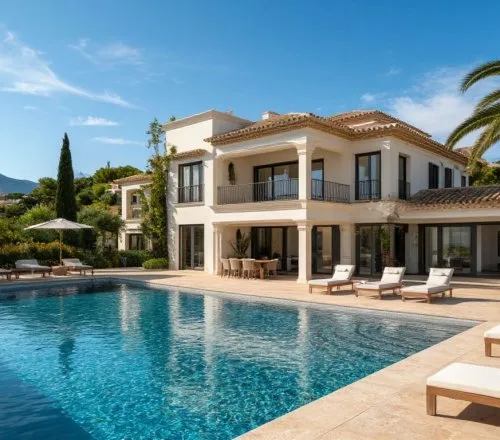
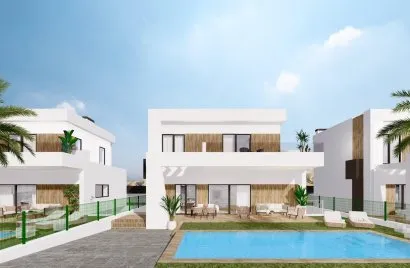
- Villas. Detached houses on private plots of land, often featuring a personal pool and garden. This type of property dominates the premium segment. The advantages include complete privacy, spacious living areas, private amenities and independence – such as not needing to coordinate facade changes with neighbours. However, maintenance costs are solely the owner’s responsibility.
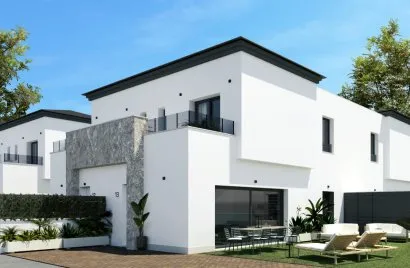
- Townhouses. Homes that share side walls with neighbouring properties but have a separate entrance and a small yard or patio. This format is most popular among middle-income families. Shared infrastructure – such as pools, gardens and playgrounds – helps reduce individual maintenance costs.
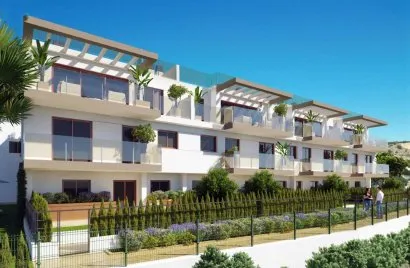
- Bungalows. Two-storey homes with a private garden and rooftop terrace. Bungalows in Spain are often part of gated communities. They are a popular choice for seasonal coastal stays because they are more affordable than villas.
Spain house price trends and forecast
In December 2025, property prices in the country rose 16.2% year-on-year, driven by both domestic demand and increased activity from foreign investors. The average cost of a house in Spain reached EUR 358,062, with prices per square metre ranging from EUR 2,157 to EUR 2,639, depending on the source. Experts predict sustained positive momentum over the next 12 months. Property values could increase by an additional 7–10% due to the following factors:
- Limited supply. New construction is not keeping pace with the growing demand. High-quality properties will continue to sell rapidly, especially in areas with well-developed infrastructure and strong rental demand.
- Improved lending conditions. The European Central Bank is expected to stick to a policy of monetary easing. The 12-month Euribor rate had already fallen to 2.236% as of 20 January 2026. Predictions indicate it will decrease to around 2%, boosting the purchasing power of Spanish citizens.
- Strong foreign demand. The country continues to be a preferred Mediterranean destination for buyers from Northern Europe, the UK and the USA, along with investors aiming for long-term capital preservation.
- Demographic pressure. A steady influx of foreign professionals and internal migration to major economic centres such as Madrid, Barcelona and Málaga is increasing pressure on the housing sector.
- Rising construction costs. The increasing cost of construction materials and a shortage of skilled labour are directly affecting the price of new builds, which in turn influences resale market prices.
Step-by-step guide to buying a house in Spain
| How to buy house in Spain as a foreigner: | |
|---|---|
| Legal assistance and tax planning | A lawyer protects the buyer's interests, verifies the property's legal status and handles Spanish documentation. Resale properties are subject to a property transfer tax (ITP) of 6–13%. New builds incur 10% VAT and 3.5% stamp duty (AJD). New legislation may increase taxes for non-EU investors. |
| Obtaining a Número de Identidad de Extranjero (NIE) | The NIE is necessary for all financial transactions. It can be obtained from the immigration office, the local police station, or a legal representative. A valid reason, such as a reservation contract or a lawyer's letter, must be provided. |
| Mortgage approval | Foreign buyers should obtain pre-approval before signing binding agreements. The approval process can take several weeks, and pre-approval helps prevent losing the deposit if financing is refused. |
| Property reservation and Due Diligence | After agreeing on the price, both parties sign a reservation agreement, and the property is taken off the market. A deposit of approximately 10% is paid. The solicitor checks for encumbrances, unpaid taxes and planning compliance. |
| Signing the contract and registering the transaction | The final step occurs at the notary's office. The purchase contract is signed, payments and fees are settled, and the notary submits the documentation to the Property Registry to formalise ownership of a villa or a townhouse in Spain. |
High ROI investment houses in Spain
If you're looking for houses in Spain for investment, the average rental rate in this segment had risen by 7.21% year-on-year as of January 2026. A continued upward trend is expected over the next 12 months, with an anticipated growth of 7.69%. This creates favourable conditions for investors adopting a Buy-to-Let strategy.
The average gross return is 7.28% annually. However, geographic analysis reveals significant yield decentralisation – the highest rates are found in areas with moderate entry costs and stable local demand, such as:
- Ciudad Real – 12.35%
- Lugo – 11.71%
- Teruel – 11.38%
- Jaén – 10.59%
Coastal and tourist destinations popular among foreigners can also generate substantial income:
- Las Palmas – 11.52%
- Valencia – 10.45%
- Toledo – 9.97%
- Murcia – 9.32%
Popular regions and cities for buying a house in Spain
Choosing the right location for buying villas in Spain in 2026 requires not only evaluating property prices but also assessing whether the local infrastructure matches your lifestyle. While major metropolitan areas are increasingly tailored to the needs of families and expats, coastal zones are focusing on eco-friendliness and modern services. Current trends indicate that proximity to major transport hubs and access to recreational areas are becoming key factors in home selection.
For family permanent residence
- Valencia: Rocafort and Godella districts. Valencia is considered one of the most environmentally friendly cities in Europe. A major attraction is the Turia Park, created in a former riverbed that runs through the city and features kilometres of cycle paths and playgrounds. The city also hosts leading international schools, such as the British School and Cambridge House, as well as modern hospitals, such as La Fe.
- Madrid: Pozuelo de Alarcón and Aravaca. Pozuelo de Alarcón ranks highly in safety and cleanliness, and is home to some of the country's top private schools and sports complexes. Aravaca, situated close to central Madrid, provides a quiet suburban setting. It is popular among families due to its low-rise housing, excellent transport links, and proximity to international schools.
For digital nomads and remote workers
- Las Palmas de Gran Canaria: Santa Brígida and Tafira. A unique combination of island climate and fully developed urban infrastructure. The historic Triana district and the beachfront Las Canteras area provide a variety of coworking and co-living spaces, such as Repeople. The island operates under a special tax regime (ZEC) with a 4% corporate tax for specific business types, and the nomad community regularly hosts conferences and meetups.
- Málaga: Pedregalejo and El Palo. The city has transformed into the “European Silicon Valley” with the opening of tech hubs by Google and Oracle, creating a modern environment with widespread 5G coverage. These neighbourhoods are popular among foreign buyers looking to buy triplexes in Spain.
Coastal towns and beachfront houses
- Estepona. Known as the “Garden of Andalusia” thanks to the beautification of its historic old town, where streets are adorned with flowerpots. Infrastructure includes a modern hospital and a seafront promenade. The city also features world-class marinas and golf courses.
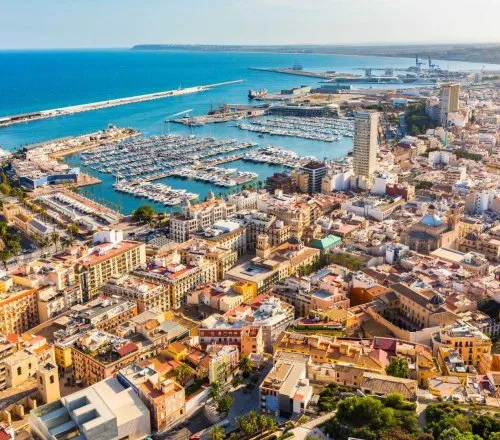
- Alicante. Its strategic location, just 15 minutes from the airport to the city centre, makes this urban area very accessible. Key attractions include the Explanada de España promenade and Postiguet beach. It acts as a gateway to charming towns like Altea and Villajoyosa while remaining a major administrative and commercial centre.
Cities with luxury houses for comfortable living
- Marbella: Milla de Oro (Golden Mile). This area boast top-tier infrastructure: private clinics, designer boutiques, and Michelin-starred restaurants in Puerto Banús. The location is protected by La Concha mountain, creating a unique microclimate. An added advantage is the presence of gated communities with 24/7 security and helipads.
- Barcelona: Pedralbes. The most prestigious district is located on elevated terrain. Home to the Royal Tennis Club and elite business schools such as IESE and ESADE. Wealthy buyers are attracted to the area for its tranquillity, panoramic views of the Mediterranean and the city, and its distance from tourist crowds.
Affordable cities and regions for living
- Ciudad Real. A peaceful university town with a rich history and city-like infrastructure, yet with much lower costs for services and leisure. It features an AVE high-speed rail station, providing travel to central Madrid in under 50 minutes.
- Murcia. A region with the highest concentration of agribusiness resources and restaurants, known as the “Orchard of Europe”. Bordered by the Mediterranean Sea, it provides access to therapeutic mud baths in Lo Pagán, stunning baroque architecture, and an extensive tram network connecting the city centre to major shopping centres.
Benefits of buying a house in Spain
| Top 5 reasons to buy a house in Spain for permanent residence or investment | |
|---|---|
| Political and legal stability | As an EU member, Spain guarantees the protection of foreign investors’ rights. Transactions are supervised by an independent public notary and registered in the Property Registry, reducing the risk of ownership disputes. |
| Transparency and digitalisation | The land cadastre and property registry are fully digitised. Buyers of a house for sale in Spain can access a Nota Simple in real time. This document reflects the property's legal status, including any debts or encumbrances, to ensure a transparent Due Diligence process. |
| Exceptional climate and environment | Spain boasts up to 300 sunny days per year and numerous Blue Flag beaches. Its coastal microclimates support well-being, and many regions benefit from low industrial pollution and high environmental standards. |
| High quality of life at moderate costs | Maintenance and daily expenses are among the lowest in the EU. The average monthly cost of living is EUR 711 for an individual and EUR 2,568 for a family of four, offering an excellent quality of life compared to Northern Europe or the US. |
| Advanced transportation system | Spain has the most extensive high-speed rail network (AVE) in Europe. As of 2026, travel times from Madrid to Valencia or Málaga are under 2–3 hours, making suburban living attractive for professionals working in major cities. |